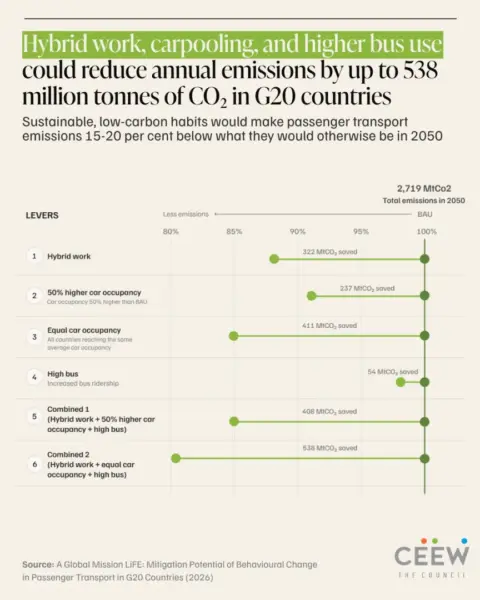


























New Delhi: Air pollution in Delhi escalates to its worst levels from early November to late February, driven by a combination of local and regional pollutants trapped by cold temperatures and stagnant winds, according to Prarthana Borah of the Council on Energy, Environment and Water (CEEW).
CEEW data from the past three years reveals Delhi consistently records more than 15 days of ‘severe’ Air Quality Index (AQI) during this winter period, as pollutants remain suspended close to the ground. Borah stressed the critical need for Delhi’s proactive winter air quality strategy, which targets multiple sectors. Its success, however, depends entirely on strict adherence, rigorous enforcement, and continuous monitoring.
She particularly called for an immediate end to open burning by security personnel and other outdoor workers, urging authorities to provide safer, practical alternatives for heating. Effective implementation of these measures is essential to break the cycle of hazardous winter smog that affects millions in the national capital.