







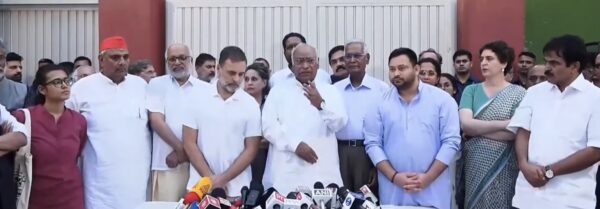
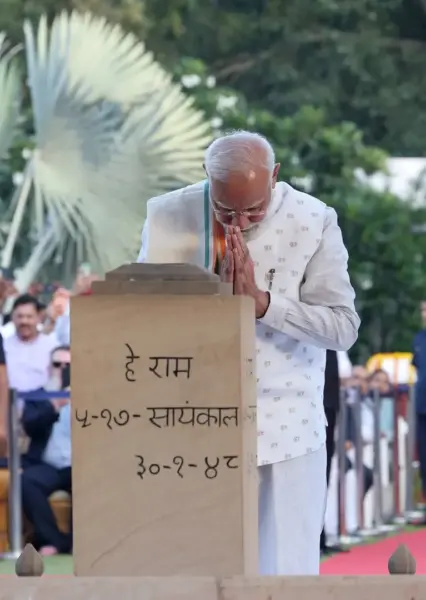




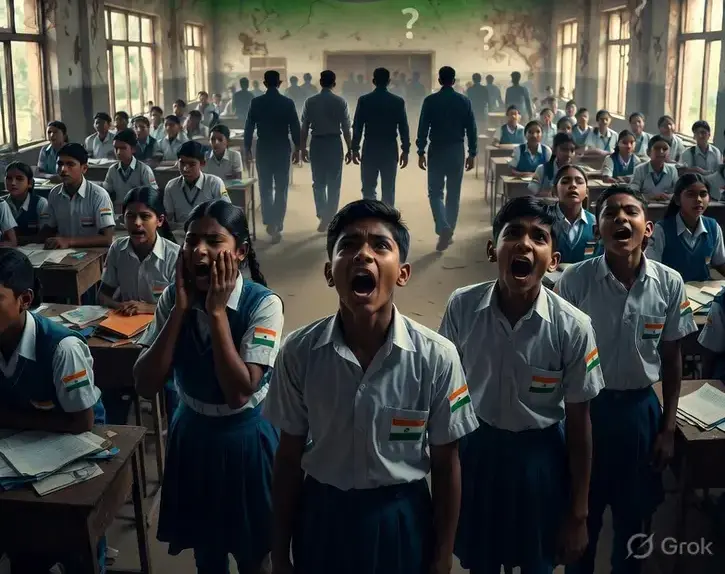
When scandal after scandal started hitting the Indian Examination Framework, many were reminded of the old adage – “ Hath Kangan ko aarsi kya padhe likhe ko Farsi kya” which loosely means; “Why does a person wearing a bangle on their hand need a mirror to see it (Obvious truths need no proof) and “Why does an educated person need Persian as a proof to read?” (Persian is a difficult language still for an educated person it’s not hard). But what if the exalted minions in charge do not want to see the obvious? And actually, be not that educated at all! Media has quoted, Kirti Azad as having commented something to the effect – In 2013, it was said leaders must take responsibility; in 2026, should follow own advice. Well politicians may take potshots at one another but it’s an extremely serious matter which has sparked off a wider debate, even protests on the streets. The fate of millions of students in India is at stake. We need to understand it’s not a matter regarding education alone, it’s a Civic issue with much wider ramifications. It transcends the realm of education and impacts the very fabric of society. So much so, that few passionate individuals have called it a ‘Human Rights’ issue. Over years, many high-profile national and state-level examinations in India have been compromised by paper leaks, cyber vulnerabilities, and organized cheating rackets.
Time and time again the innocence and youthful aspiration have been tragically betrayed. Be it – NEET, UGC, SSC CGL (Staff Selection Commission), UGC-NET (University Grants Commission National Eligibility Test), CUET (Common University Entrance Test), CBSC, you mention the exam, it stands compromised. NEET (National Eligibility cum Entrance Test): India’s largest medical entrance exam has faced severe controversies, including large-scale paper leaks, proxy candidates, and marks manipulation, leading to exam cancellations and widespread student protests. UGC-NET (University Grants Commission National Eligibility Test): Conducted for fellowships and junior professorships, the exam was severely disrupted by integrity breaches and paper leak allegations. SSC CGL (Staff Selection Commission): This massive recruitment exam for government ministries was marred by large-scale question paper leaks, prompting Central Bureau of Investigation (CBI) inquiries. CUET (Common University Entrance Test): India’s unified admission test for central universities has faced various technical glitches, evaluation issues, and data security criticisms, CBSE (Central Board of Secondary Education): The board has faced leaks for major papers, such as Class 12 Economics and Class 10 Mathematics papers. Its online evaluation portal has also faced scrutiny regarding severe ethical hacking vulnerabilities that exposed student records. Even today, as we go to print, the CBSE website has been malfunctioning. Following a four-day delay, the Class 12 re-evaluation and verification portal went live, but students are reporting widespread technical glitches and server errors. Despite such glaring misdemeanours of conduction agencies, no concrete action (at least not visibly) seems to have been taken against those responsible. The frustration of Students and Parents is understandable. But they are at a mercy of a system which is akin to an umbrella with holes. Reminding many of the ditty – Raat raat raat kala chata hain jisme me kai chhed! Well, many observers are expostulating – this is no longer alarming it’s disgusting.
And for many who are thinking that conducting the All-India Level Examinations is a really tall task must remember that the Gaokao (China’s National College Entrance Examination) is the largest examination in the world by candidate volume, with over 13 million students participating annually, ENEM (Brazil): The Exame Nacional do Ensino Médio is Brazil’s national high school exam, typically sees over 4 million applicants who use it for university admissions and scholarships, SAT (USA): A widely used standardized test for college admissions in the United States, logging roughly 2 million test-takers globally each year, and yes NEET UG (India): India’s largest medical entrance examination, has over 2.4 million candidates competing for undergraduate medical and dental seats.
Indian citizens are concerned that the Education System may lose its credibility in the world. Readers must be remembering the instances CPL Holders of Pakistan Aviation Industry, which received much publicity. Although, the US and Europe do not have a centralized list of “unrecognized” countries. Instead, recognition depends on institutional accreditation and national compliance with the Bologna Process (in Europe) or regional/national accreditation bodies in the US Unaccredited Universities. All of this is at stake for India. Already, Degrees from countries facing major institutional collapse, political conflict, or a lack of standardized national quality control are often not recognized automatically. Countries with Systemically Unrecognized or Problematic Systems today are Afghanistan: Decades of conflict have dismantled a standardized national education system, causing international bodies to reject unverified degrees, Yemen & Syria: Prolonged wars have severely damaged or entirely compromised the accreditation and operational capacity of universities, Somalia & South Sudan: Higher education is often shaky, with South Sudan specifically operating without a functional national Council of Higher Education, meaning degrees frequently cannot be verified, Pakistan: Lower education tiers and the higher education sector have faced systemic quality concerns and budgetary limitations, requiring closer transcript inspection. Does India want to join this list? All Indians know how high browed and ready to thumb their noses against all things Indian, Europe, US, Japan et al, can be. The hard-earned reputation of Indians as highly skilled professionals should not get besmirched! As it is in countries like UK, Asian Doctors (India, Pak) did well, now media reports that Pak Doctors are being shunned.
As it is, Indian youth hardly have any solid role model. Combine this with the general restless of Gen Z and Alpha, without a credible source of correct information, own platform preferences, exposed to large scale AI generated disinformation, Fake News, etc. the cauldron is already boiling and ready for a revolution of sorts. Elders advise that Indian society is still quite stratified on lines of Caste, Region, Ideology, Religion, Language, Connections to power centres, Monetary Earning of Family and many other planes and the government should strive against adding another area of conflict. One needs to admire those who despite odds, are still trying to go for mainstream aspirations, though quality higher education. There is this famous quote by Ian Fleming in the 1959 novel Goldfinger (and the 1964 film) – “Once is happenstance. Twice is coincidence. The third time it’s enemy action.” Is it enemy action this time against India? Who are these enemies? Many experts claim that they may be from within. Is it the reason that the Armed Forces are being roped in for extended duties in this arena? Would this be the preferred route in future as well? Many educationists predict it to be inimical. Others are even liking India to Countries like Columbia or even Pakistan where the Army is into everything. And why the Army or Airforce? We have a sterling organization like the UPSC which has been conducting by and large fair selections. A corporate observer even quipped that Education Ministry is after all not Petroleum where a few Corporates can be called in to handle many a tricky situation. Incidentally many PSU Oil & Gas Companies used to conduct their own entrance exams quite successfully and managed issues for recruitment like paper leak before relying now mostly on GATE. Elders even say, that someone heading a particular Ministry of the Government, should have a proclivity for it. The Prime Minister should not be called upon to monitor every problem. Delegation and decentralization are the pillars of any democratic order. Herbert Simon, the American Scholar had said, “Many individuals contribute to every large decision, and the problem of decentralisation is arranging the complex system into an effective scheme.” The task of setting things right in the Indian Examination System may not be easy but it needs to be done; period. And ASAP.