

















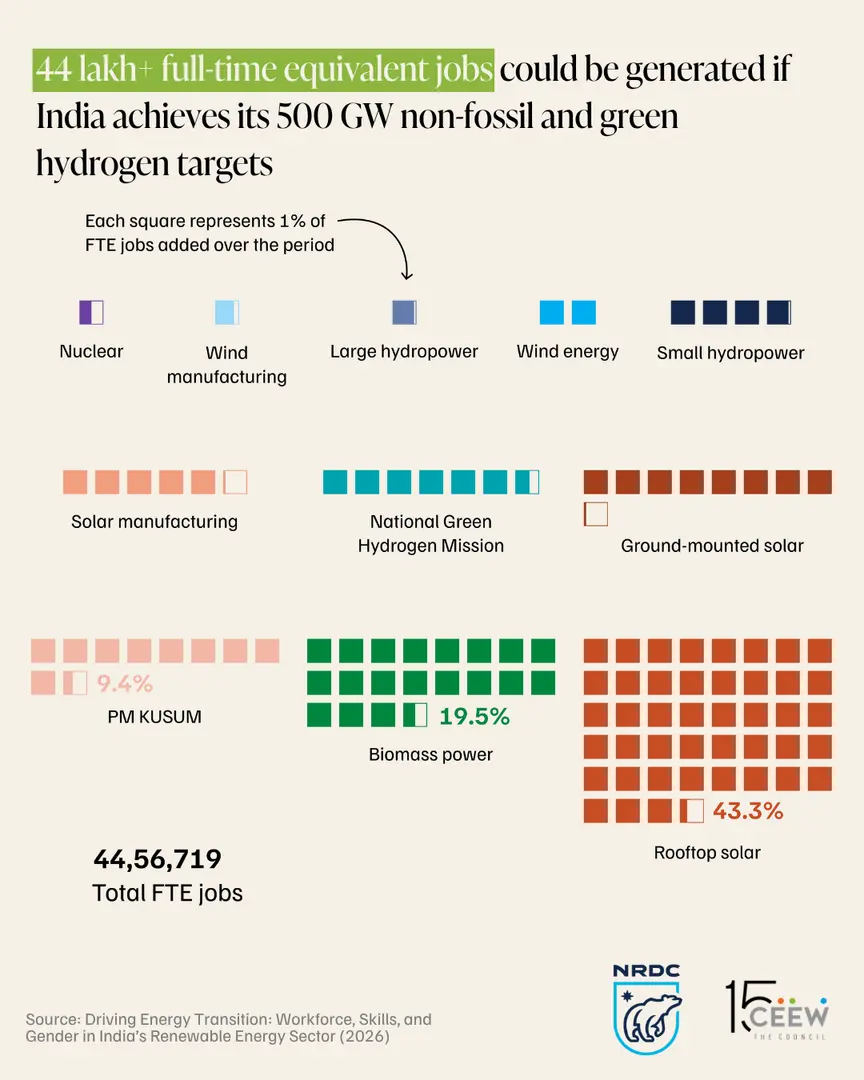
India’s ambitious stride towards achieving a sustainable future is not just a leap towards cleaner energy, but also a significant potential catalyst for job creation. The independent study, “Driving Energy Transition: Workforce, Skills, and Gender in India’s Renewable Energy Sector,” highlights the substantial impact of these initiatives on employment. It reveals that the push towards non-fossil fuel sources and the implementation of the National Green Hydrogen Mission could result in the creation of approximately 4.4 million full-time equivalent jobs.

The rooftop solar sector, in particular, emerges as a major job creator, projected to generate around 43% of these new roles. This is significant, considering the distributed nature of rooftop installations which often require localized skills and manpower for installation, maintenance, and customer service. This sector’s growth is pivotal in not only advancing India’s green energy objectives but also in fostering economic development at the community level.
The comprehensive report, guided by the Ministry of New and Renewable Energy (MNRE) and based on surveys from companies across various renewable sectors during 2024–25, developed nuanced employment coefficients. These coefficients provide insights into the labor intensity of different technologies and stages of business development within the clean energy sectors. The findings underscore the direct employment opportunities spanning component manufacturing, project deployment, and ongoing operations.
India’s Leap to 50 GW Renewable Capacity..Click Here
India’s achievements in renewable energy are already notable on the global stage, ranking third in installed capacity and reaching its goal of 50% cumulative electric power capacity from non-fossil sources in 2025, a milestone achieved five years ahead of schedule. These accomplishments underscore the nation’s commitment to not only environmental sustainability but also economic vitality through job creation.
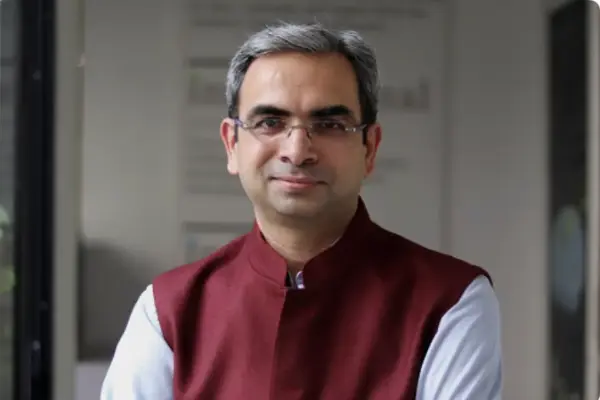
Shri Santosh Kumar Sarangi, Secretary of MNRE, emphasized the human-centric approach of India’s energy policies. “The positive externalities of focusing on people within the green transition are significant. Last year alone, we recorded about 51 gigawatts from solar and wind energy. We are optimistic that this momentum will not only continue but will expand in the years to come,” he stated, highlighting the alignment between India’s economic growth and sustainability goals.
Echoing this sentiment, Dr. Arunabha Ghosh, CEO of CEEW, pointed out the broader implications of India’s energy sector evolution. “The transition is not merely about adding gigawatts of clean energy but is fundamentally a workforce transition. It’s about creating robust livelihoods, enhancing skills, strengthening domestic supply chains, and ensuring widespread benefits,” he explained. Dr. Ghosh also stressed the importance of investing in quality skill development, maintaining transparent workforce data, and fostering inclusive participation to truly harness the employment potential of India’s clean energy sector.
As India continues to invest and expand its green energy infrastructure, the focus on creating a skilled, well-employed, and inclusive workforce remains central. The ongoing developments not only position India as a leader in renewable energy but also as a beacon of substantial socioeconomic growth driven by sustainable practices.