











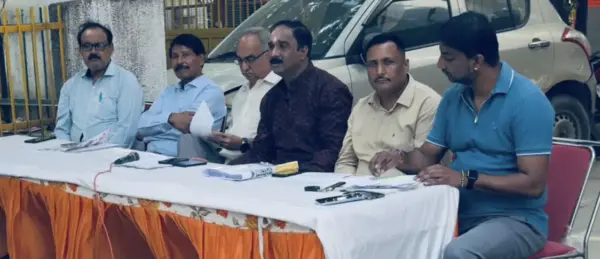

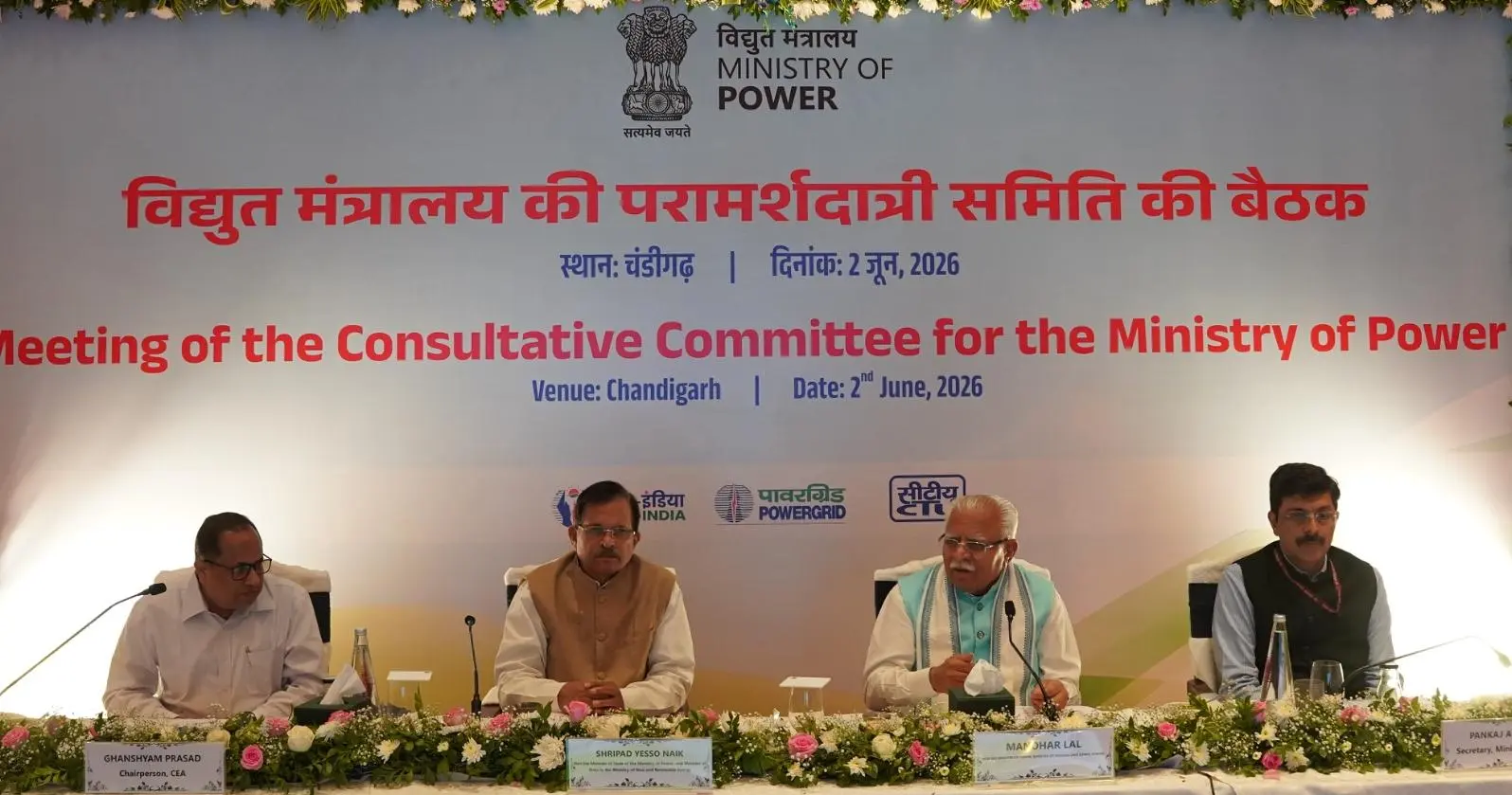
On June 2, 2026, a pivotal meeting for the Consultative Committee of the Ministry of Power took place in Chandigarh, focusing on the critical issue of ‘Grid Stability’. The session was presided over by Shri Manohar Lal, the Union Minister for Power, and saw the participation of notable figures including Shri Shripad Yesso Naik, Minister of State for Power, several Members of Parliament who are part of the Consultative Committee, the Secretary of the Ministry of Power, and high-level representatives from major power sector bodies such as the Central Electricity Authority, Grid Controller of India Limited, and Central Transmission Utility of India Limited.
The assembly engaged in comprehensive discussions regarding the evolving demands for grid stability amidst India’s escalating electricity needs, substantial integration of renewable energy, and the increased presence of inverter-based generation resources and large-scale loads. Topics of discussion included the secure integration of renewable sources, enhancement of transmission capabilities, energy storage, dynamic reactive power support, grid adaptability, adherence to technical norms, forecasting, power quality, and the overall resilience of the power grid.
It was unanimously recognized that the stability of the power grid is fundamental to ensuring national energy security, especially as India transitions towards sustainable energy sources. The grid must be supported by systems that are reliable, adaptable, and robust.
The Committee commended various ongoing initiatives aimed at bolstering grid reliability. These included planning for resource adequacy, ancillary services, promoting energy storage solutions, deploying STATCOMs and synchronous condensers, monitoring through PMU-based systems, conducting black-start mock drills, and the reinforcement of technical standards. A significant achievement highlighted was the integration of over 50 GW of renewable energy capacity within a single year.
Specific strategies were endorsed to further secure grid stability with substantial inverter-based generation resources and large loads. These strategies encompass: 1. Coordinating the commissioning of transmission lines with renewable energy (RE) generation projects to minimize curtailment. 2. Advancing pumped storage projects for long-duration storage to bolster resource adequacy and provide inertial support. 3. Facilitating the location of bulk consumers near large renewable generation sites to reduce transmission costs. 4. Implementing devices such as STATCOMs and synchronous condensers to aid in voltage stability and strengthen system support. 5. Creating regulatory and commercial frameworks to utilize flexibility services from renewable and storage systems. 6. Regularly updating and reviewing technical standards for emerging technologies like battery storage systems, grid-forming inverters, electrolyzers, and data center loads. 7. Enhancing compliance monitoring through routine self-audits and reporting by grid-connected entities. 8. Improving renewable energy forecasting with advanced weather data, calibration and maintenance of weather stations, and installing automatic weather stations at renewable energy facilities. 9. Strengthening the resilience of the grid by enhancing transmission and distribution infrastructure in areas prone to severe weather, maintaining emergency restoration systems, and improving black-start capabilities for quicker recovery. 10. Developing frameworks for assessing power quality and harmonics given the growing use of inverter-based resources.
The meeting concluded with a collective commitment to pursue a vision for an Indian power grid that is not only clean but also reliable, flexible, secure, and resilient.