


















New Delhi: Recent reports have indicated a hike in the cost of commercial LPG cylinders by ₹111. It’s essential to understand that the pricing of commercial LPG is influenced by international market trends and benchmarks, leading to price adjustments based on the global LPG market dynamics. However, the price for domestic LPG cylinders remains stable.
India relies on imports for approximately 60% of its LPG needs, tying the prices of domestic LPG closely to international figures, particularly the Saudi Contract Price (CP). Despite a significant increase in the Saudi CP from US$ 385 per metric ton in July 2023 to US$ 466 in November 2025, the domestic LPG prices saw a decrease of about 22% during this period, reducing from ₹1103 to ₹853.
The government has been proactive in cushioning domestic users from price volatility. In Delhi, for example, a 14.2 kg cylinder of domestic LPG is priced at ₹853 for non-PMUY consumers and ₹553 for PMUY beneficiaries, marking a substantial price drop of about 39% for PMUY users since August 2023. This pricing strategy is part of the government’s broader initiative to maintain affordable access to clean cooking fuel.
For the fiscal year 2025-26, the government has committed to continuing a targeted subsidy of ₹300 per cylinder for up to nine refills annually for PMUY consumers, with a budget allocation of ₹12,000 crore. Such initiatives underline the government’s dedication to ensuring that households have access to affordable clean cooking options.
Despite the rise in global LPG prices over the past year, the government has absorbed these increases to prevent any impact on domestic LPG prices, resulting in a financial shortfall of ₹40,000 crore for Oil Marketing Companies (OMCs). To counterbalance these losses and keep LPG prices stable, the government has approved a compensation of ₹30,000 crore for OMCs.
A comparative analysis of LPG prices in the region as of November 1, 2025, showcases the relative affordability of LPG in India, with the cost significantly lower than in neighboring countries like Pakistan, Sri Lanka, and Nepal.
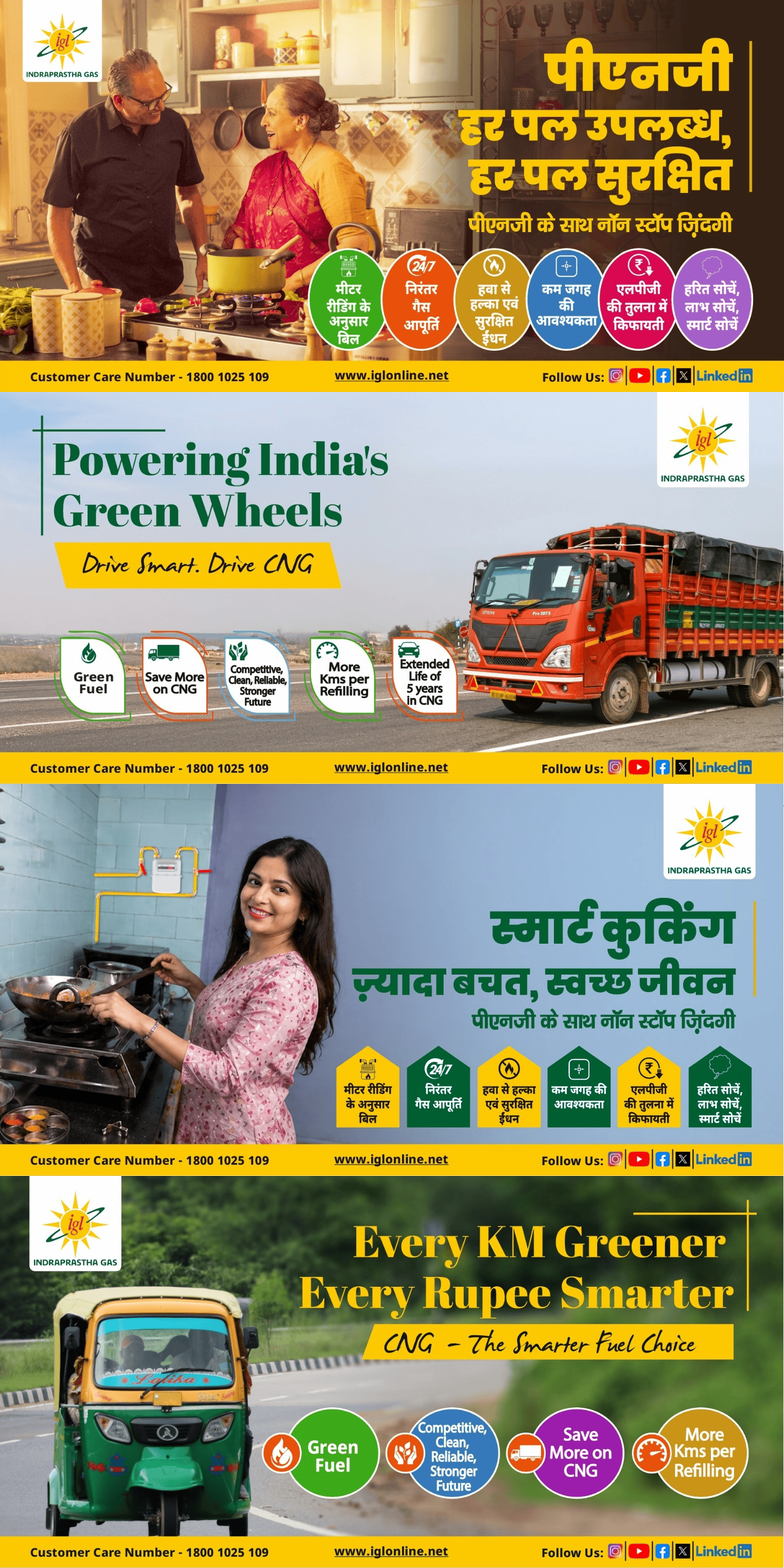
Furthermore, the start of the new year brought additional good news for consumers of clean fuels, with reductions in the prices of Compressed Natural Gas (CNG) and Piped Natural Gas (PNG) in selected cities from January 1. These decreases are a result of recent adjustments in pipeline tariffs and aim to alleviate the financial burden on households and motorists, while also encouraging the adoption of cleaner energy sources.
Despite the adjustments in commercial LPG prices, which cater to larger businesses such as hotels and restaurants, the prices for domestic LPG have not been altered, reflecting the government’s sustained effort to shield household consumers from international price swings.
In summary, while commercial LPG prices are subject to international market fluctuations, the government’s strategic measures continue to protect domestic consumers, ensuring LPG remains affordable and promoting cleaner fuel usage nationwide.