
















Pumped Storage Projects (PSPs), crucial components in the renewable energy infrastructure, serve as large-scale energy storage systems that help balance grid demand and supply. By using excess power to pump water to a higher reservoir and then releasing it to generate electricity when required, PSPs effectively store surplus green energy for use during peak demand periods or when solar and wind resources are low. This mechanism not only enhances energy security but also supports the integration of renewable energy sources into the grid.

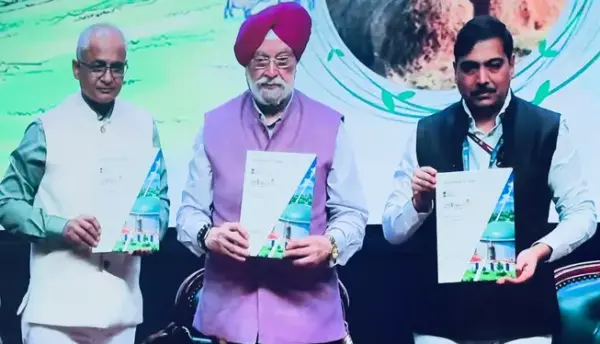
During a recent meeting of the Consultative Committee of the Members of Parliament for the Ministry of Power held in Pinnapuram, Kurnool district, Andhra Pradesh, the focus was squarely on the advancement of Pumped Storage Projects. Chaired by Shri Manohar Lal, Union Minister of Power, the session saw the participation of Sh. Shripad Yesso Naik, Minister of State for Power, and other prominent members from both houses of Parliament, along with senior officials from the Ministry of Power, Central Electricity Authority (CEA), and Central Public Sector Undertakings (CPSUs).
Minister Shri Manohar Lal highlighted the critical role of PSPs in managing the storage and distribution of surplus green power. He proposed innovative solutions like the integration of floating solar panels atop reservoirs to minimize water evaporation—a dual strategy enhancing water and energy conservation. He also emphasized the essential role of state governments in the rapid development of these projects by facilitating necessary approvals and reconsidering various levies currently imposed on PSP operations.
The committee was briefed that India has identified a potential of approximately 224 gigawatts (GW) for PSP development. Presently, projects totaling 7 GW capacity are operational, with an additional 12 GW under construction. Plans are underway to develop another 78 GW, demonstrating the scale of India’s commitment to enhancing its energy storage capabilities.
In terms of policy support, the government has implemented several measures to expedite PSP deployment. These include guidelines simplifying the process for site allocation, significant financial incentives such as the exemption from Inter-State Transmission (ISTS) charges for a period of 25 years, and budgetary allocations to support infrastructure development necessary for these projects. The recent policy adjustments, particularly the exemption of off-stream closed-loop PSPs from certain regulatory approvals and the adjustment of capital expenditure thresholds for project concurrence, have been designed to streamline operations and attract more investment into the sector.
The members of the committee expressed their approval of these robust policy measures and discussed additional strategies to further enhance PSP deployment across the country. They also deliberated on the environmental impacts of such projects, acknowledging that while PSPs involve some level of environmental interaction, their overall footprint is considerably lower compared to conventional energy storage and generation facilities.
Highlighting a key achievement, Sh. Shripad Yesso Naik, Minister of State for Power, noted the successful commissioning of the Pinnapuram PSP and Tehri PSP, which collectively added significant capacity to the national grid. This success underscores the effective collaboration among central and state governments, CPSUs, and the private sector in advancing India’s energy storage infrastructure.
As the meeting concluded, the collective sentiment was optimistic, with a clear pathway toward accelerating the development of Pumped Storage Projects, ensuring they play a pivotal role in India’s transition to a more sustainable and secure energy landscape.