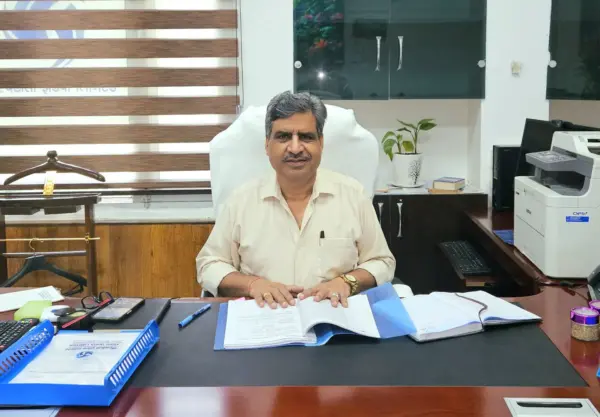











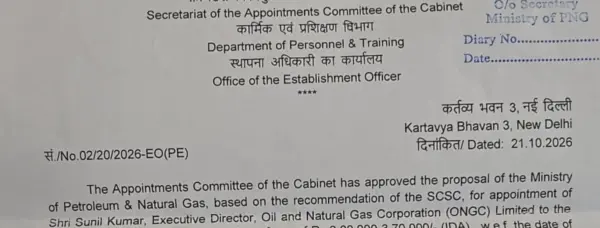


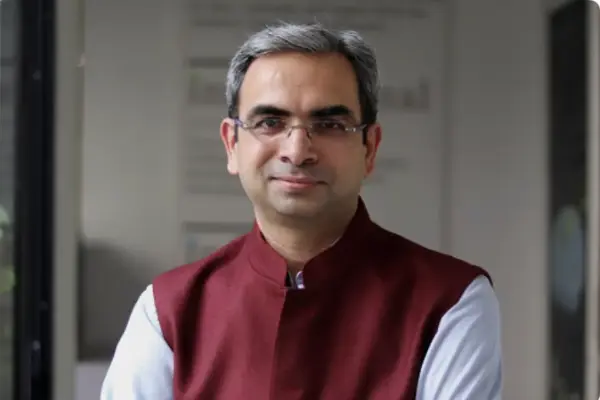


In a significant reshuffle within the Indian government, Petroleum Secretary, Mr. Pankaj Jain has been recommended as Member Secretary of the 8th Pay Commission. This pivotal appointment could necessitate consequential changes at the helm of Petroleum Ministry. It could lead to potential shifts in leadership that harbinger future policy and regulatory frameworks.
As Mr. Jain transitions to his new role, the vacancy left behind is poised for igniting a series of high-stake appointments within the Ministry. Observers also point out that there exist high profile vacancies within the Oil & Gas Public Sector Undertakings (PSUs), notable being BPCL and GAIL. It’s to be seen whether the Petroleum Secretary is able to participate in the selection process.
With the petroleum industry poised at a very crucial juncture, facing both domestic challenges and global market dynamics, these appointments are being closely watched. Industry experts and stakeholders alike are keenly following developments.
For instance, the interview for the next CMD of Gas Authority of India Ltd. (GAIL) is scheduled for the 6th of next month, a key position that oversees significant portions of India’s energy infrastructure. Similarly, there is some talk about the upcoming interview for the CMD of Bharat Petroleum Corporation Limited (BPCL), set for Seemingly the 4th. These interviews are not merely procedural but are critical in shaping the strategic direction of these major companies.
What’s intriguing in this unfolding scenario is the composition of the search committee tasked with these high-profile interviews. The inclusion of the Secretary of Petroleum in the committee may be a standard practice; however, with Mr.Jain’s new assignment, it raises questions about who will represent the ministry in these interviews. Will it be the newly appointed Secretary Petroleum or will Mr. Jain continue to influence these proceedings until the transition is completed?
This situation presents a dual layer of complexity. On one hand, there is the administrative challenge of filling the top positions within India’s vital energy sector PSUs. On the other, there is the procedural nuance of managing these transitions smoothly to ensure continuity and stability in policy implementation.
Industry experts argue that the choices made in these appointments could signal the government’s long-term strategic priorities for the Energy Sector, especially at a time when the world is increasingly shifting towards sustainable energy solutions. The effectiveness of these leaders in navigating the complexities of the international energy markets, coupled with pushing forward domestic energy policies, will be crucial.
As these processes unfold, the eyes of the industry will be keenly watching the outcomes of these interviews, the personalities involved, and the subsequent impact on India’s energy strategy. This scenario is not just about bureaucratic reshuffling but could be a reflection of broader policy shifts that determine the future of energy security and economic growth in India.