






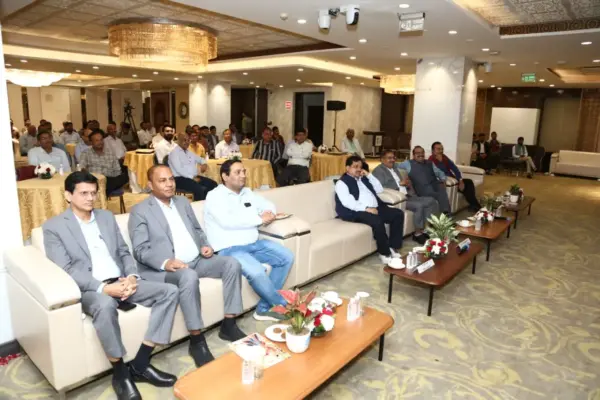






Mumbai : Speaking at the ‘Revitalizing India’s Maritime Manufacturing Conference’ in Mumbai, Shri Hardeep Singh Puri, the Minister of Petroleum and Natural Gas, highlighted the critical role of India’s maritime and energy sectors in the nation’s economic advancement. The conference was a part of the broader India Maritime Week 2025 celebrations.
According to Minister Puri, India’s economy, which currently boasts a GDP of approximately $4.3 trillion, is significantly bolstered by the external sector, accounting for nearly half of this figure through exports, imports, and remittances. He emphasized the essential role of the shipping industry in supporting India’s trade-driven growth.
With India’s daily crude oil consumption having risen from 5 million barrels four and a half years ago to about 5.6 million barrels today, and projections suggesting it will reach 6 million barrels per day soon, the energy demand in the country is surging. The International Energy Agency forecasts that India will account for nearly 30 percent of the global increase in energy demand over the next two decades.
The minister pointed out the strategic importance of the shipping sector in energy security, noting that India imported around 300 million metric tons of crude and petroleum products while exporting about 65 million metric tons during the fiscal year 2024-25. The oil and gas sector represents nearly 28 percent of India’s total trade volume, underscoring the critical role of ports in the national economy.
Shri Puri also addressed the high costs associated with freight, which significantly impact the total import bill. He revealed that Indian public sector undertakings (PSUs) spent nearly $8 billion over the past five years chartering ships, money he argued could have been invested in developing an Indian-owned tanker fleet.
The government is actively pursuing strategies to boost domestic ship ownership and manufacturing. Initiatives include aggregating PSU cargo demand, promoting the Ship Owning and Leasing (SOL) model, establishing a Maritime Development Fund for vessel financing, and enhancing the Shipbuilding Financial Assistance Policy to encourage the construction of LNG and ethane carriers.
Under Prime Minister Narendra Modi’s leadership, India’s maritime infrastructure has significantly grown, with port capacity and cargo volumes seeing substantial increases. The Sagarmala Programme, aimed at modernizing ports and enhancing coastal connectivity, has mobilized projects worth over Rs 5.5 lakh crore.
The minister also highlighted the global partnerships Indian shipyards are forming, such as Cochin Shipyard’s collaborations with L&T and Daewoo, which are instrumental in bringing cutting-edge technology to India.
Looking forward, Shri Puri projected that the maritime sector would attract investments of about Rs 8 trillion and create approximately 1.5 crore jobs by 2047. He noted India’s strategic role in developing global trade routes, including the India–Middle East–Europe Economic Corridor and the International North-South Transport Corridor.
In conclusion, Minister Puri stated that under PM Modi’s guidance, India is leveraging its maritime capabilities not just as economic gateways but as drivers of growth and national development, emphasizing the government’s commitment to promoting a developed and self-reliant India through enhanced maritime strength.