









What India especially the Capital, witnessed in last couple of weeks was unprecedented in its own way. It surprised many. Maybe the adversaries, the most. The National Eligibility-cum-Entrance Test (NEET), the test for aspiring Doctors, examination paper leak was an unlikely cause to create a furore rarely seen in recent years. Examination paper leaks in India recur with uncanny regularity and was hitherto taken in the stride. Of course, India is not an exception. For example, in UK, bodies like Cambridge International Education have faced security compromises where A-level and IGCSE math, physics, and computer science papers were leaked online or stolen, forcing boards to cancel these papers or arrange for replacements. In United States, Standardized test security is occasionally breached. High-profile SAT and ACT cheating rings have involved insider leaks, stolen test booklets, or proxy test-takers across various testing centres. As regards East Asia, though rare, China’s Gaokao have hist reported isolated incidents of test booklet thefts or electronic leaks. So, India appears to be in good company.
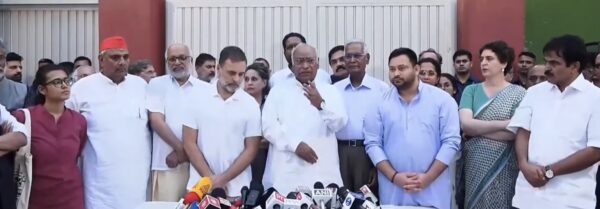
The developments regarding NEET Paper leakages, the protests in Jantar Mantar Delhi by the Cockroach Janata Party joined by Sonam Wangchuk who went on a 26-day indefinite hunger strike. There was harsh Police action, including, reportedly, ‘evidence’ of use of nail studded batons, pellet guns and in Bihar an AK 47 being wielded came to light. In Delhi the protest started in Janpath on June 6, 2026, there was a march toward Parliament on July 20, 2026 and ended on July 25, 2026, upon the then Union Education Minister – Dharmendra Pradhan having resigned. There was celebration amongst a section of youth but the agitation had mixed outcomes and it got politicalised. And there seems to be a simmering undercurrent existing even now. The Apex Court has also been approached by some parties in the matter. The Government in turn proposed to bring in stringent laws against the perpetrators of paper leaks. The Public Examinations (Prevention of Unfair Means) Amendment Bill, 2026, proposes strict penalties including up to 10 years in prison and fines reaching ₹50 lakh for individuals and up to ₹10 crore for organized groups involved. There are provisions regarding Service Provider Liability, Exam-conducting agencies involved in leaks face fines up to ₹5 crore and an 8-year ban; Dedicated Fast-Track Courts would be established and time-bound investigations to ensure speedy trials for offences. A High-Powered Specialised Task Force would be formed headed by technology leader Nandan Nilekani to overhaul the testing framework and data security. Well, there is debate going on in the Parliament and it has to be seen whether it gets passed.
Meanwhile NewsIP, which has always strived to keep its readers abreast with the latest news and analysis wishes to share a few significant issues. Thought leaders have the following noteworthy points for consideration of the policy makers. For ease of readers, they have been briefly mentioned hereunder as bullet points:
NEET, like Civil Services, should have a Preliminary Examination. It could be the first screening stage of NEET Examinations. It can consist of Objective-type (multiple-choice) papers which include General Studies, Domain Knowledge and Aptitude Tests.
There should be a Preliminary Tender for listing of Technically Qualified agencies for Conducting the test. Thereafter, a Proper Tender process should be carried out for the Shortlisted parties on a Two Bid System.
There should be at least 4 to 5 of Separate Sets of Similar Question Papers and One should get selected on a Random basis for actual use in the examination. This particular question paper may be made available to the Test Centres from a Single Source; on a Hub & Spokes pattern at an appropriate time. Full Online Testing Mode should be attempted.
Instead of Printing, a different method should be used for Communication of the Question Paper. Traditional Computer Based Testing (CBT can be augmented /substituted by newer techniques. A Large Format Display can be used to broadcast the Question Paper to the Centres.
Independent NEET Answer Peripherals can be used by students for Answering. A Sterile Server, with total isolation can be used to host the Question Paper to be attempted. Answers can be given on a Spread Sheet through dedicated communication Network or even on social media like WA after QR Code, OTP and Retinal Confirmation.
AI Tools can be used to make the whole process more object oriented. ERP Solutions, Hiring of Transponders/Satellite Communication by National Testing Agency should be done The Expected Answers to the Question Paper should be shared on the National Testing Agency Website upon final completion of Examination Time. It would be a much more transparent process. An important suggestion (though not easy to incorporate we must add) is that the Question Paper should be immune from Leakages. What it means is that despite leakage the Questions would require specific inputs not easy to attempt unless one has in-depth knowledge and comprehension. This is somewhat on the lines of Open Book Examinations. Competency Testing, Application Based Testing & Behavioural should become the basis of NEET Examination.
Transparency begets trust, therefore full transparency should be ensured during and after Test Regular Interaction with other Testing Agencies like UPSC; Educational Testing Service (ETS): The world’s largest private educational testing and measurement organization, which administers TOEFL, GRE, and Praxis exams; Pearson VUE: Leader in computer-based high-stakes testing, delivering academic, licensure, and certification exams across an extensive secure network; Prometric: Provider for secure testing environments, handles large-scale academic admissions and professional licensing examinations globally; College Board: A US-based non-profit organization that develops and manages SAT; Act Inc. which does ACT test, for standardized college admissions assessments and educational research programs; British Council etc. Adequate Budget should be allocated to NTA for the needful. Initial Capital Expenditure should be approved to ensure procurement and use of adequate Technology. An Annual Audit of the Examination needs to be done by an Independent Agency to ensure Correctness, Fairness and Feedback.
Many of the suggestions may not really be immediately implementable but experts have shared these as the directional nodes to act upon. Education is the backbone of any country and Medicine is a different, difficult and highly ethical profession. Indian Doctors have done well in the past and are working all over the world. Let’s keep their name and morale high. The whole world is looking at India. And India believes in “Vaidyo Narayano Harih”.