







Will the next energy tsunami hit India?
Synopsis

Many Oil & Gas experts say it’s not a matter of if but when! The way things are panning out in the energy sphere, India is likely to be confronted with a situation, which it may find extremely demanding, to say the least. With USA & EU breathing down its neck for sourcing crude from Russia, Indian shoulders are about to touch the wrestling mat. Two Private Refiners did download Russian Crude recently despite objections but that respite may be transient. Both the Indian Private Refiners have made a killing by purchasing Russian crude and exporting the products to EU & USA. From the days of Covid and its aftermath, the unprecedented profits enjoyed by the Indian private refiners, riding on the crest of sovereign support of India, forced windfall taxes to be imposed, for the first time in India. These unprecedented profits wiped out all accumulated losses and the Indian Private Oil & Gas players were in the seventh heaven. The fairy tale was too good to last.
The dark cloud of sanctions and lack of market openings is a sad reality. Dark clouds loom large over the Private Oil & Gas Companies in India. But the Private Oil & Gas companies having tasted blood were certainly not willing to let go of the choicest morsels. Oil & Gas sector in India has seen unprecedented demands and it poised to overtake even China, the largest consumer today. By 2030, India’s demand is expected to reach 6.7 million bpd, up from 5.4 million bpd in 2023. The growth rate of 3.2% or 1.3 million bpd would be due to increasing need for road transport fuels and to some extent of petrochemical feedstock. In FY24, India consumed approximately 233 million metric tonnes (MMT) of petroleum products. Diesel accounted for nearly 40 per cent of the total, followed by petrol at 15–16 per cent, LPG at 12–13 per cent, petroleum coke at 10–12 per cent and Aviation Turbine Fuel at 3–4 per cent.
This shows the voracious appetite for liquid fuel in India. India is currently the world’s third-largest importer of crude oil, depending on imports for over 85 per cent of its needs. Additionally, Natural gas production is expected to increase steadily from 36.6 billion cubic metres (BCM) in FY25 to 57.4 BCM in FY30. The share of natural gas in India is expected to raise in India’s primary energy mix from 6 per cent to 15 per cent by 2030. Given these projections, Oil & Gas seems to be the sector where all the moolah is. If played properly, the profits in the sector would be mind boggling. And with the absolute control of a sellers’ market and commanding heights which open up will make any capitalist salivate. Extraordinary wealth with minimal efforts is well within reach and all that is required is a shout out for ‘level playing field’. What if the PSUs are forced or anyway cajoled, to part with their infrastructure – Pipelines, Tankages, Storage Facilities and skilled manpower? All this without any capital investments and vague premises of profit sharing.
But then again, this is where the government role is supposed to come in as an impartial arbiter and trustee of the common man. It becomes absolutely crucial for national growth and long term energy security. IT has not escaped the notice of most observers that the Private Players have reportedly continued to source crude from Russia while Oil PSUs have a nuanced approach. This, readers may find a bit confounding. However, just a bit of contemplation would reveal which corporates are driven by prudence and which by mere lucre. And if the world markets and exports dry up, no problem, the domestic market hitherto shunned by the private players, is where the products will be pushed into. If the market dominance of Oil & Gas PSUs can be shattered by either a Price war or allegations of Impurity of products, the war is almost won.
The eternal debate of whether the Oil & Gas Sector, with its strategic nature, should continue to have both PSUs and Private Companies seems to have become tautological in India. Although most countries have a more practical approach and continue to have Government Companies as a policy. Be it China, Russia, Brazil, Malaysia, Singapore, Pakistan, Bangladesh, Srilanka, Saudi Arabia et al have government Oil & gas Companies. Surely all these nations cannot be wrong. Then where is the need for India to annihilate Oil & Gas PSUs? And if some were to question whether there is such a move at all, well they are living in a fool’s paradise. The writing is on the wall. The latest assault on the infrastructure of PSU Oil Companies is not a secret anymore.
PNGRB has gone ahead with a rather shaky proposal of using Pipeline Infrastructure of PSUs on a common carrier principle. Pray, what is the fundamental premise of a common carrier Pipeline? Availability of excess capacity. Barauni – Kanpur Pipeline, a captive Pipeline owned by a PSU was handpicked as an initial ‘fall guy’. Objections and resistance by Unions and Officers Association immediately erupted. This may have put the whole matter currently on a back burner. The matter has been widely reported in the mainstream media and with the Bihar Elections looming large, it seems to have become a bit of a ludicrous proposal, both commercially and politically. But who is to show reason to babus? The ‘complicity’ seems to be obvious by the fact that a Private Refiner could not contain its glee when it wrote to PNGRB (an advocated independent body) thanking it for the moves undertaken. Experts opine that Pipelines are the most profitable, environment friendly and cheap mode of transportation of Oil & Gas. Most Pipelines, world over, like the traditional transport industry make the maximum profits. In fact, a leading Oil PSU has stopped publicly showing prominently independent balance sheets of Refineries & Marketing Sections (which it used to earlier) since they do not make profits while Pipelines Section consistently posts profits. Therefore, if any Private Oil & Gas Company is to rake in profits domestically, it has to have a solid transportation system.
The need to acquire the Pipeline Infrastructure is acute, almost painful. The best way is to enter through the back door of common carrier principle. Gone are the days of legitimate first mover advantage, making capital investments, developing infrastructure, natural monopolies, these can be sacrificed at the altar of expediency. Acquiring government infrastructure without concomitant payments in the name of level playing field is the last but most effective resort. This is proven beyond doubt by the fact that none of the Private players have shown interest in Tenders invited by the same PNGRB for new Pipelines (LPG etc.) The game is far reaching and billions of dollars are at stake.
Cut to some of the current happenings in a well-known leading profit making Oil & Gas PSU. The position of Director (Pipelines) is lying vacant for some time and while the position of Director (R&D) is said to be actively pursued, thus there are mixed signals being sent about Director (Pipelines). Pipelines is currently being headed by an Executive Director who is a non-Board member and he is to report to Director (Refineries). Already moves were afoot for amalgamating Pipelines Stations of this PSU with Marketing Installations and wide spread manpower rationalization. These actions were pursued quite vigorously and with unprecedented haste, with justifications and rationalizing, even with day long meetings with employees, by the top leadership. All of a sudden it seems to have lost steam. There seems to be an abrupt loss of words.
Though whispers of the plan going ahead, albeit a bit later are also there. But why not now? It seemed to be well thought out and the current leadership went all guns blazing. What happened? The nation wants to know. The Annual Non Officer Movement Orders, which the Management is usually announces on 1st July every year were kept in abeyance and announced only recently that too without the proposed and ‘justified’ changes. There are also some murmurs in corridors of power that there is a possibility of PESB proposing a date for Selection of Director (Pipelines) in the 3rd or last week of August. All these are certainly not normal developments. The common man has a right to know what is going on behind one of the leading profit making PSUs? Is the PSU also going to go the Coal India way? Energy, as we all know will continue to dominate the economics of future.
The flip flops, experts state, point at lack of foresight and hurried knee jerk reactions to somehow placate the private sector. They say it’s all very chancy, as there seems to be no clear cut plan for future. What if after all, there is total privatization in the Oi & Gas Sector? Will the private companies still be covenanted to provide Oil & Gas to Indian citizens at reasonable prices as government PSUs have been doing? Will the government even have any say in face of geo political/economic pressures? The answer can at best be a guesstric yes. It actually all comes down to money. What the citizens can be made to pay. But do remember the adage – Money is like seawater. the more you drink, the thirstier you become. Well Indians have seen the consequences of rampant privatization in Aviation and Hospitality Sector. Will Oil & Gas be next?
The Oil PSUs are steadily losing market share and are unable to make good their under recoveries. It’s a matter of time when domestic Oil & Gas Sector will be having only private players. The fear of the common man is in times of crisis will these companies stand up to the needs of the nation and its people? As is oft stated by private companies they are in business to make profits not for charity. Profits will surely be their primary and sole concern. At best, If the domestic market cannot support prices then exports will be resorted to and if that fails Production will be cut. Fuel bunkers will be allowed to run dry if the government does not provide subsidy. So what? It would be back to where things were. So much so for LPG (Liberalization, Privatization and Globalization). Mind you the Ujjawala Scheme is a case in point. No Private company participates in it. Only the PSUs carry the citizens on their shoulders.
Therefore, to expect that the common man or the nation will stand to benefit from total privatization is paradoxical! Just as absolute power corrupts absolutely, most experts opine, absolute monopoly of any company, will bring in absolute heavy-handedness. Just when NewsIP is going to Press, it is being reported that USA will impose additional 25% Tariff on India ( making a total of 50%). How this impacts the Oil & Gas sector is to be seen. But then, it is certainly not the right time to make experimentations. In any case, the middle class always is at the receiving end. And the Indian middle class is gradually becoming an endangered species thus the most experimented upon. Is life truly fair for them? But come on, who said life is easy? Ones not to reason why but to do and die! And as Maggie Smith, the British actress said – Don’t be defeatist, dear, it’s very middle class.
You May Also Like
NBCC Holds 2026 Vigilance Session on Manuals and Circulars
Oct 17, 2026
17 Oct 2026 | New Delhi | Newsip Desk: National Buildings Construction Corporation Limited (NBCC) held an awareness session on the “Vigilance Manual 2026 & Master Circulars” in New Delhi, with the aim of promoting greater transparency in the system. Sh. Srinivas Malladi, IRSE, DGM-SCR, addressed the session as its speaker. Also Reading: NBCC Wins […]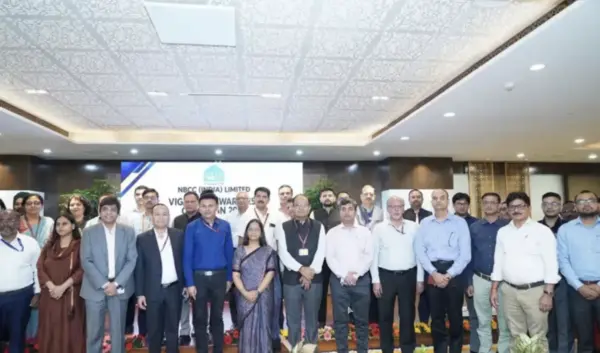
NMDC Vigilance Initiatives Launched in Hyderabad
Oct 17, 2026
HYDERABAD — Highlighting the link between corporate integrity, record growth, and responsible mining, NMDC Chairman and Managing Director Amitava Mukherjee emphasized that the company’s strong sustainability performance compares favorably with international mining peers, reflecting its deep-seated commitment to responsible operational practices. Speaking at a high-level capacity-building programme organized by NMDC’s Vigilance Department in Hyderabad, Mukherjee […]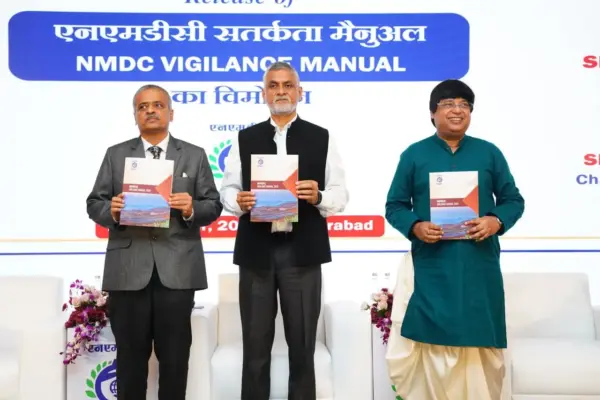
IGL Uses AI to Strengthen CNG Cylinder Safety Inspections.
Oct 15, 2026
15.10.26 – By NewsIP Bureau – New Delhi – Indraprastha Gas Limited (IGL) has highlighted a technology-led safety initiative aimed at strengthening CNG cylinder verification before refuelling, with an AI-powered pilot project designed to check cylinder hydrotest validity at 10 CNG stations. The initiative focuses on a key concern for CNG vehicle owners: ensuring that […]
POWERGRID Acquires Gujarat Green Energy Transmission SPV
Oct 15, 2026
15 Oct 2026 | Place: New Delhi | By-: Newsip Desk :Power Grid Corporation of India Limited (POWERGRID) has acquired Jam Khambhaliya REZ Transmission Limited, a project special purpose vehicle (SPV), after emerging as the successful bidder under the tariff-based competitive bidding process. The acquisition was completed on 12 October 2026 from PFC Consulting Limited, […]
3-Day Project Management Workshop for PSEs Kicks Off at SCOPE Complex, New Delhi
Oct 14, 2026
TPM Workshop Begins at SCOPE Complex in New Delhi New Delhi: The National Workshop on Totality of Project Management (TPM) — a flagship Project Management Workshop — was inaugurated by Shri Atul Sobti, Director General, SCOPE, at SCOPE Complex, New Delhi, in the presence of Shri Adesh Jain, Chairman, International Institute of Projects and Program […]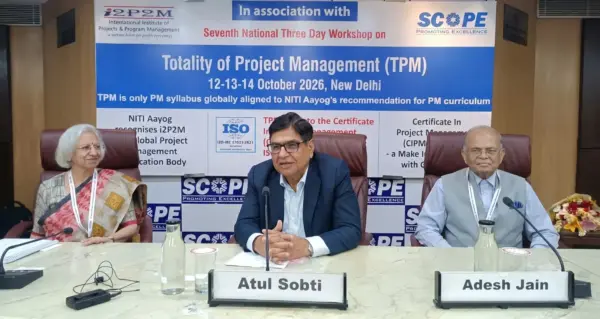
Oil India Subsidiary Forms Hind Oil Biofuels JV for Clean Energy.
Oct 14, 2026
14 Oct 2026 | New Delhi |Newsip Desk: Oil India Limited has informed that its wholly owned subsidiary, OIL Green Energy Limited (OGEL), has incorporated a joint venture company, Hind Oil Biofuels Private Limited, in India. The company was incorporated on October 13, 2026. Hind Oil Biofuels will focus on producing compressed biogas, biofuels […]
Sponsored by Google, a partner of NewsIP Associates.
Sponsors' Logos








Appointments News
NMDC Appoints Sarita Chauhan as Government Director
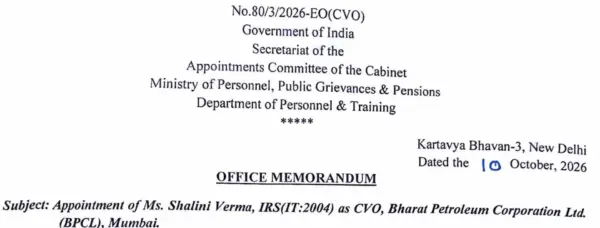
Shalini Verma Appointed as BPCL Chief Vigilance Officer
Sh. Ajay Verma Assumes Charge as Executive Director (Projects) at THDC India Limited
GAIL Appoints Rajeev Kumar as Government Nominee Director

ACC Approves Manoj Kumar Sharma as GAIL Director Projects