












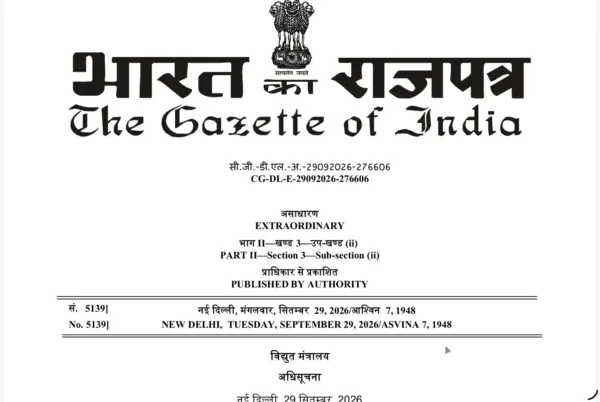









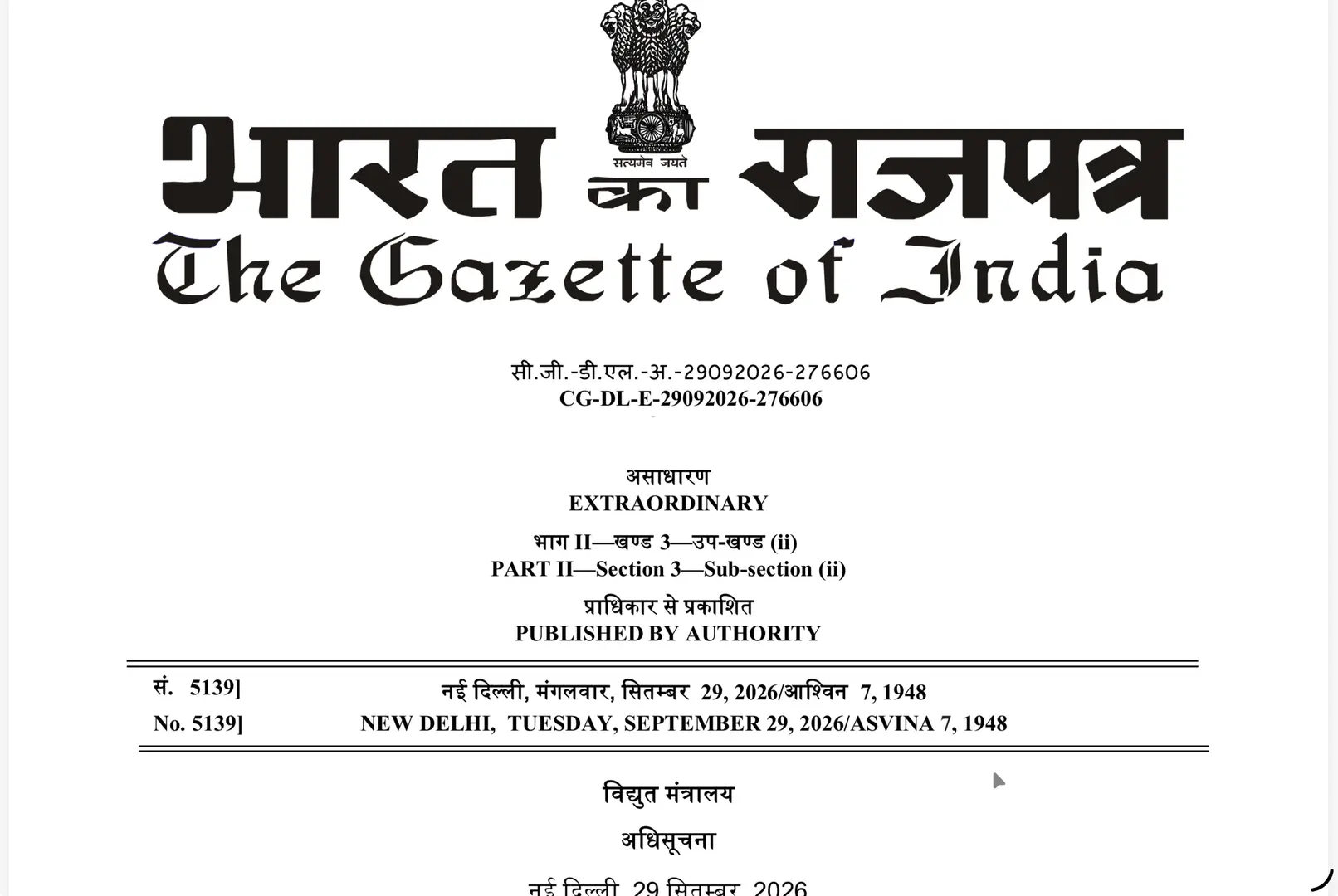
A major efficiency reset is now on the horizon for India’s passenger vehicle market, with the Ministry of Power notifying a new Corporate Average Fuel Economy framework that will begin on 1 April 2027.
The new CAFE norms, announced in New Delhi on September 30, 2026, will apply to new passenger vehicles manufactured or imported for sale in India. The framework will remain in force until 31 March 2032, replacing the existing CAFE regime from the date it takes effect.
At the centre of the notification is a tighter fuel-consumption pathway. The benchmark will move from 3.996 litres per 100 km in 2027–28 to 3.3273 litres per 100 km in 2031–32. Over the five-year period, that represents an improvement of around 16.7 per cent.
The tightening will not be uniform in design. The revised target line has been flattened to create what the framework describes as a more balanced, weight-sensitive approach. Lighter vehicles will face relatively softer targets, while heavier vehicles will carry greater fuel-efficiency requirements.
Another notable change lies in the reference weight used under the norms. It has been raised from 1,082 kg under the existing regime to 1,229 kg under the new CAFE norms, an increase of around 13.6 per cent. The notification says this reflects the evolving characteristics of India’s passenger vehicle fleet.
The new framework also widens the compliance options available to automobile manufacturers. Cleaner technologies, alternative fuels and other innovative solutions have been recognised as part of the regulatory pathway. The notification specifically refers to solar reflective paints, advanced glazing and high-efficiency air-conditioning as technologies that can help improve vehicle fuel efficiency.
The policy also recognises renewable and low-carbon fuels, including ethanol-blended petrol, biofuels and compressed biogas, through the introduction of the Carbon Neutrality Factor. This gives manufacturers another route to improve fleet-level CAFE performance, alongside vehicle efficiency upgrades and electrification.
Electric and advanced vehicle technologies also receive recognition. Battery Electric Vehicles, Range-Extended Electric Vehicles, Plug-in Hybrid Electric Vehicles, Strong Hybrid Electric Vehicles and Flex-Fuel Vehicles will receive volume derogation factors, also referred to as super credits, in fleet-average calculations.
The Ministry has said the framework is intended to support India’s energy security and sustainability objectives. It also links the new norms to rapid technological developments, wider availability of alternative and renewable fuels, rising electrification and evolving global automotive technologies.
The passenger vehicle segment remains a significant part of India’s transport energy demand and continues to contribute to fossil-fuel consumption. By tightening fuel-efficiency requirements over five years, the government has now set a defined regulatory course for manufacturers planning their future vehicle portfolios.